The practice
We give Mother Nature a seat at the table, designing solutions that work for humanity within ecosystems, not just for the humans in front of us.
Systemic Design is human-centred design, grown up: a way of working that designs for the whole system a decision touches: the people, the structures they live inside, and the living world all three depend on.
Human-centred design gave the world permission to begin with people. Two decades on, it’s no longer enough, because the human is never alone. Every decision lands inside systems, communities and ecologies that have no seat at the table. Systemic Design gives them one.
The default since the 2000s. Brilliant at making things people want, quieter on what those things cost the world around them.
Foundations for the next chapter. People still matter, they’re just no longer the only ones the work has to serve.
Not a replacement for human-centred design. Its next orbit.
By the time a product, place or platform reaches the world, its footprint is mostly fixed. Orbital Design moves the climate conversation to where it counts: the decisions made at the start.
Most design serves one party: the end user. Orbital Design holds three in frame at once, and refuses to trade one off against the others.
The interconnected frameworks that shape how things work: economies, supply chains, infrastructure, organisations.
The collective wellbeing of people, communities and cultures. Everyone, not just the end user.
The natural world we depend on: ecosystems, biodiversity, water, soil, air, climate.
You don’t move one to six. You move where the work needs you, and often, back again.
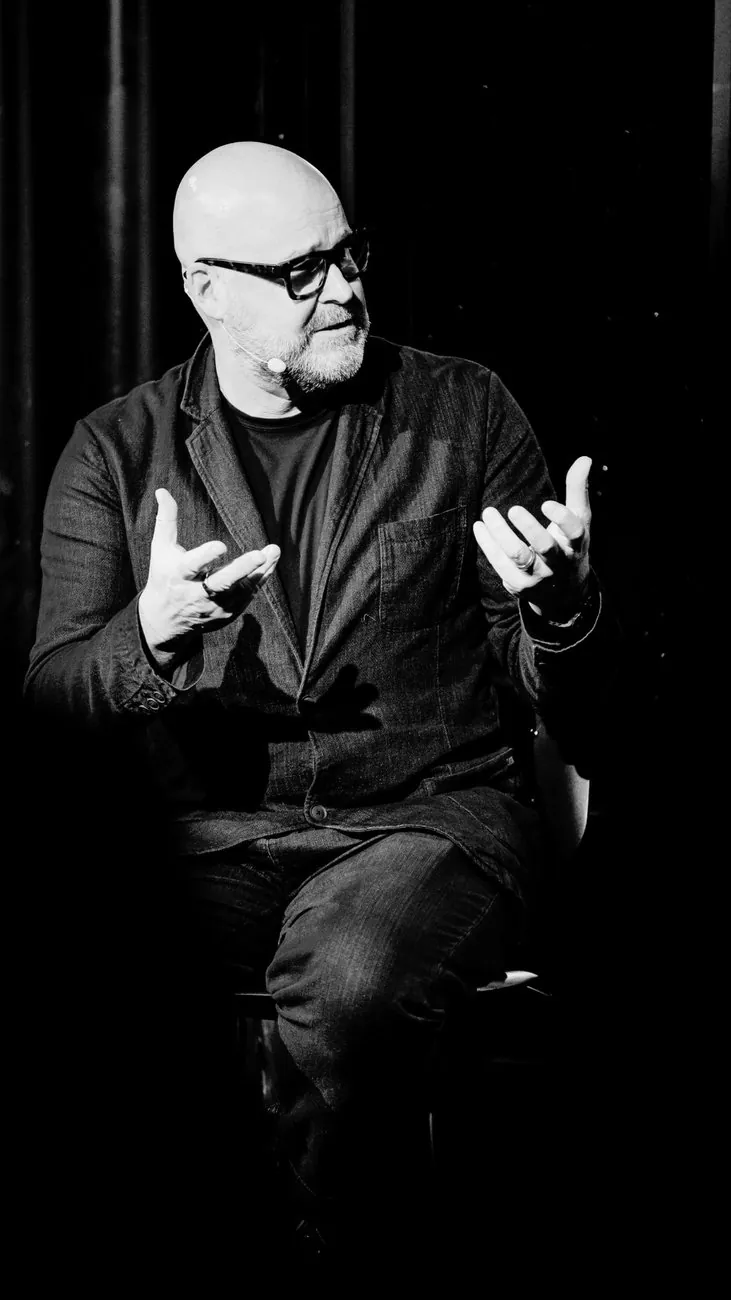
“We spent two decades designing for the person in front of us. The bill for everyone else came due. Orbital Design is how we start paying it forward.”
Not a poster on the wall. Here are the three pillars, out in the world.